The increasing frequency of extreme climate events has exacerbated the risks of geological hazards, including soil erosion, landslides, and debris flows. Surface soil, as the critical interface between the atmosphere and the subsurface, plays a central role in mass and energy exchange. Abnormally strong hydro–thermal interactions at this interface are a major trigger for geological hazards, while the hydro-mechanical stability, structural integrity, and weathering resistance of soils largely determine their capacity to withstand extreme climatic disturbances. When drought and intense rainfall alternate, can surface soils exhibit strong climate resilience and even progressively strengthen, akin to certain living organisms?

Figure 1. Mitigation of geological hazards induced by extreme climates through a bio-based buffer barrier
To address this critical challenge, the team led by Prof. Chao-Sheng Tang proposed an innovative strategy: for the first time, a dense and durable protective layer at the ground surface, namely a bio-based buffer barrier (bio-carbonated barrier), was constructed through the bio-carbonation of reactive magnesia (Fig. 1). This barrier mitigates the adverse impacts of extreme climate and enhances the climate resilience of soils. By simulating extreme climatic wet–dry cycles, the climate resilience of the buffer barrier in terms of mechanical, physical, and chemical properties was systematically investigated. Combined with macro- and micro-scale analyses, the underlying mechanisms of its self-enhancing performance were further elucidated. The main findings are summarized as follows:
(1) Wet–Dry Cycles Enhance the Climate Resilience of the Buffer Barrier
Soil structures are generally prone to degradation under wet–dry cycles. However, the bio-based buffer barrier demonstrates remarkable self-enhancing behavior. After six wet–dry cycles, the tensile strength of bio-carbonated samples increased by a factor of 3.2 compared with samples subjected to a single cycle, indicating a significant enhancement in cementation (Fig. 2). The concurrent increase in P-wave velocity and decrease in water absorption further indicate that the buffer barrier structure progressively densifies and stabilizes.
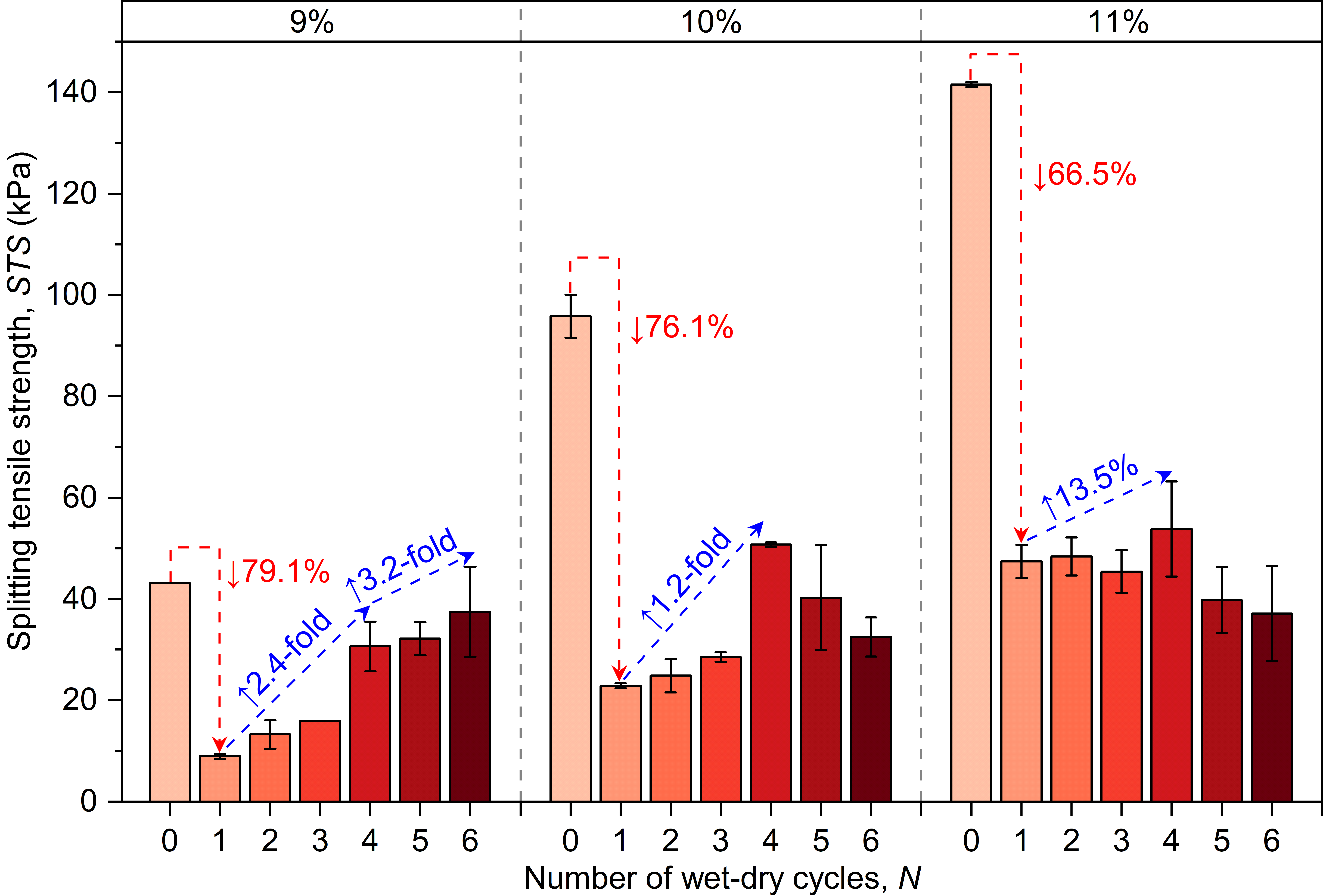
Figure 2. Evolution of splitting tensile strength under wet–dry cycles
(2) High Carbon Sequestration Capacity and Favorable Ecological Compatibility
The bio-based buffer barrier actively captures CO2 during each wet–dry cycle, resulting in a twofold increase in total carbonate content after six cycles (Fig. 3), demonstrating remarkable carbon sequestration capability. Meanwhile, the barrier maintains a pH considerably lower than that of conventional cement-stabilized materials, thereby reducing the risk of alkalization and contamination to groundwater and soil ecosystems.
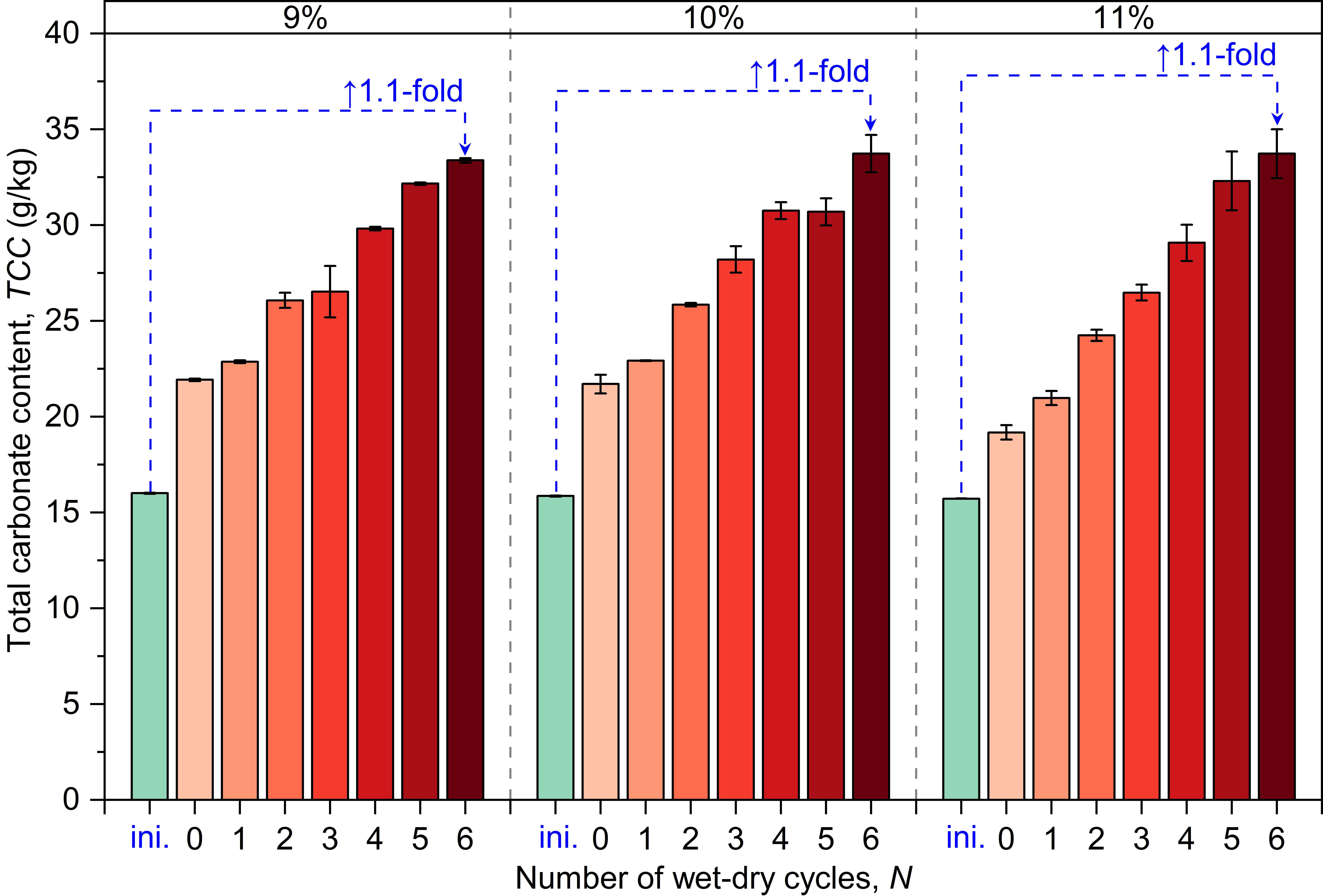
Figure 3. Evolution of total carbonate content under wet–dry cycles
(3) Synergistic Enhancement of Climate Resilience through Crystal Reorganization and Carbon Capture
Low-crystallinity hydrated magnesium carbonates (HMCs) undergo dissolution–recrystallization–self-assembly to form rosette-like crystal clusters, enhancing cementation both among HMCs and between HMCs and soil particles. Residual reactive magnesia and brucite react with atmospheric CO2 during drying, further increasing soil density and cementation performance. This synergy between crystal reorganization and carbon capture represents the key mechanism underlying the enhanced climate resilience of surface soils (Fig. 4).
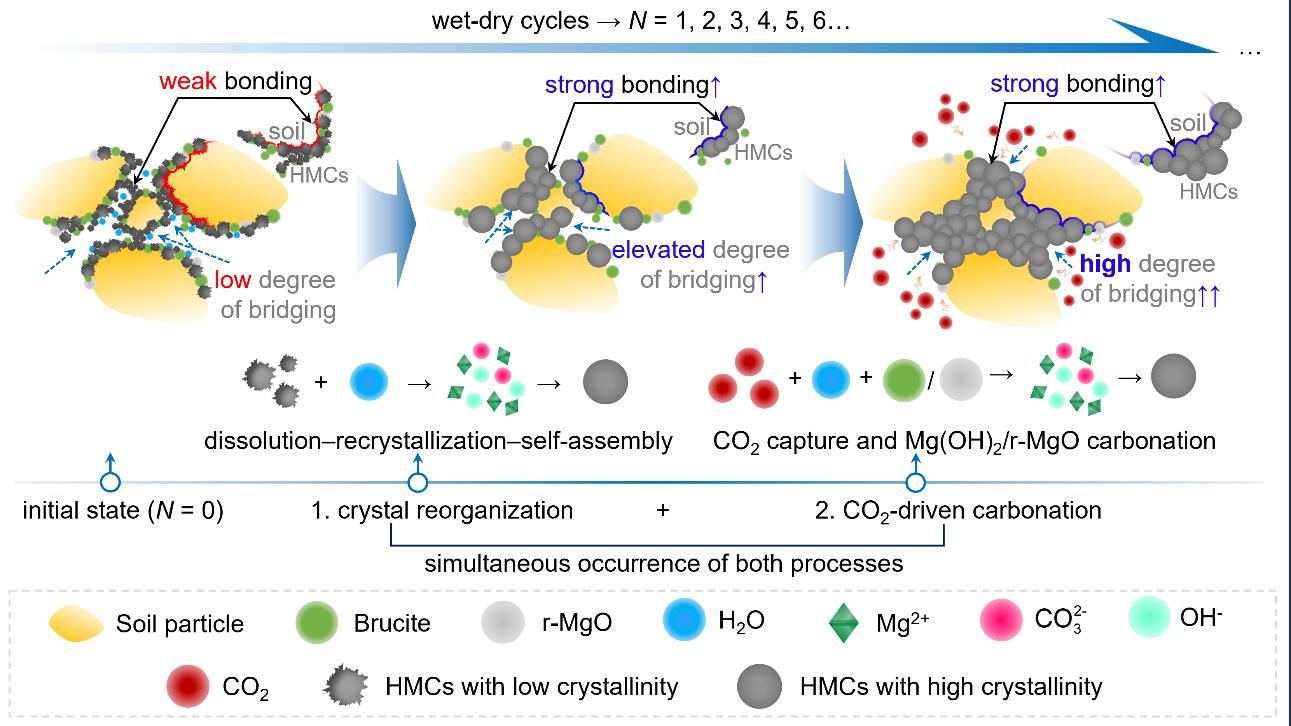
Figure 4. Schematic diagram of the mechanisms underlying self-enhanced climate resilience of the bio-based buffer barrier
In summary, the bio-based buffer barrier not only exhibits self-enhancing performance and effectively resists structural degradation under wet–dry cycles, but also actively sequesters atmospheric CO2, providing an efficient, low-carbon, and sustainable solution for mitigating geohazards under extreme climates. Moreover, it opens a new pathway for bio-geotechnical engineering in enhancing climate resilience and developing climate-adaptive protective systems for surface soils.
The study, entitled “Self-enhancing climatic resilience of surface soil through bio-carbonation constructed barrier”, was recently published in the authoritative journal Engineering Geology. Rui Wang, a PhD student at the School of Earth Sciences and Engineering, Nanjing University, is the first author, with Professor Chao-Sheng Tang as the corresponding author. This research was supported by the National Natural Science Foundation of China (Grant No. 42525201).
The full article is available at: https://doi.org/10.1016/j.enggeo.2026.108607