Despite the economic importance of lithium, there is considerable disagreement over the processes that concentrate it and other rare metals in pegmatite-type lithium deposits. Two main processes have been invoked, namely extreme differentiation of a peraluminous granitic magma and direct anatexis of a sedimentary protolith. With the benefit of a systematic study of core from the deepest holes drilled into a pegmatite field, this study had the opportunity to evaluate pegmatite genesis from the source of partial melting to the site of crystallization.
The Songpan-Ganzi Orogenic Belt extends for approximately 2800 kilometers, along which are distributed more than ten super-large pegmatite-type lithium deposits, such as Jiajika, Ke'eryin, Zawulong, and Bailongshan, forming China's largest rare metal metallogenic belt, the "Songpan-Ganzi Lithium Belt". Facing new demands from the national resource strategy and breakthroughs in prospecting, there is an urgent need to address scientific questions concerning the geological setting, ore-forming dynamics, sources of ore-forming materials, mineralization potential, and ore-controlling factors of the Songpan-Ganzi metallogenic belt.
In January 2021, with the support of Nanjing University's Excellence Program, Academician Zhi-Qin Xu led the Continental Dynamics Team at Nanjing University to implement the Jiajika Pegmatitic Lithium Deposit Scientific Drilling Project, aimed at revealing the deep structure and genetic mechanism of the pegmatite-type lithium deposit. This study, based on systematic sampling of a total of 4211 meters of deep drill cores from the Jiajika area, and comprehensive petrological, mineralogical, and geochemical investigations of representative regionally zoned pegmatite dykes (Figure 1), quantitatively investigated the lithium enrichment mechanisms during orogenic metamorphic anatexis, magma emplacement, and evolution. A three-stage genetic model for the Jiajika pegmatite-type lithium deposit is proposed:
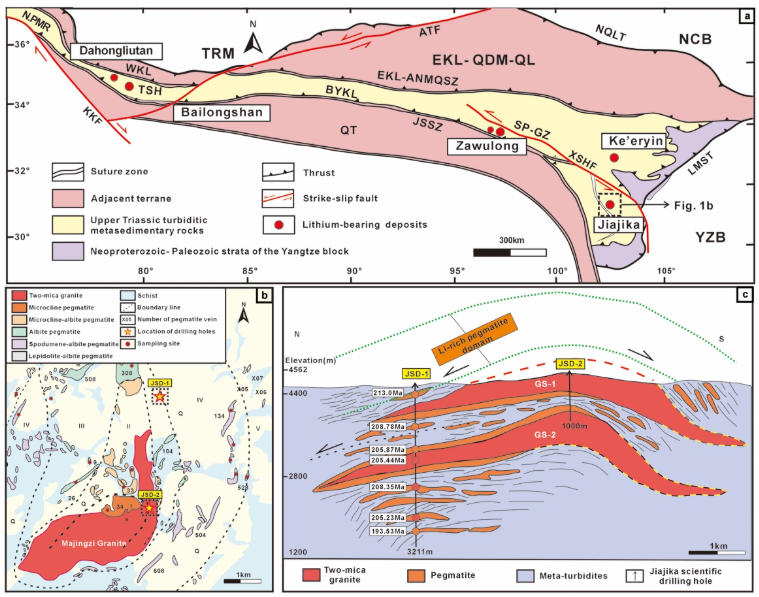
Figure 1. (a) Tectonic sketch map of the Songpan-Ganzi terrane in the northern Qinghai-Tibet Plateau; (b) Geological map of the Jiajika pegmatite-type lithium deposit; (c) Multi-layer sandwich structure composed of deep-seated multi-layer domed granite sills (GS-1 and GS-2) and pegmatite vein swarms (Pg) intruded into metamorphic sedimentary rocks (T3) in the Jiajika lithium ore field.
Stage 1: Primary Enrichment of Rare Metals through Crustal Partial Melting.
During the early stage (~221 Ma) of crustal shortening and thickening in the Cimmerian Orogeny, the sedimentary cover experienced large-scale intense folding and thrusting. A south-directed detachment fault developed between the cover and the basement, accompanied by Barrovian metamorphism. Based on the P-T path of Barrovian metamorphism, phase equilibrium simulations indicate the release of 2.5 wt.% H2O during prograde metamorphism. Mass balance modeling and batch melting modeling estimate that partial melting of a small volume of source rock (approximately 5%) occurred, with 10–30% of lithium in the initial melt derived from metamorphic fluids. Whole-rock geochemical indices of granite (Rb/Sr vs. Rb/Ba and δ30Si–SiO2) consistently indicate that the parental melt of the Jiajika granitic pegmatites originated from the partial melting of pelitic rocks. The lithium content in the initial magma generated by metamorphic anatexis was enriched by 3–8 times compared to the average upper crustal value (38 ppm) (Figure 2).
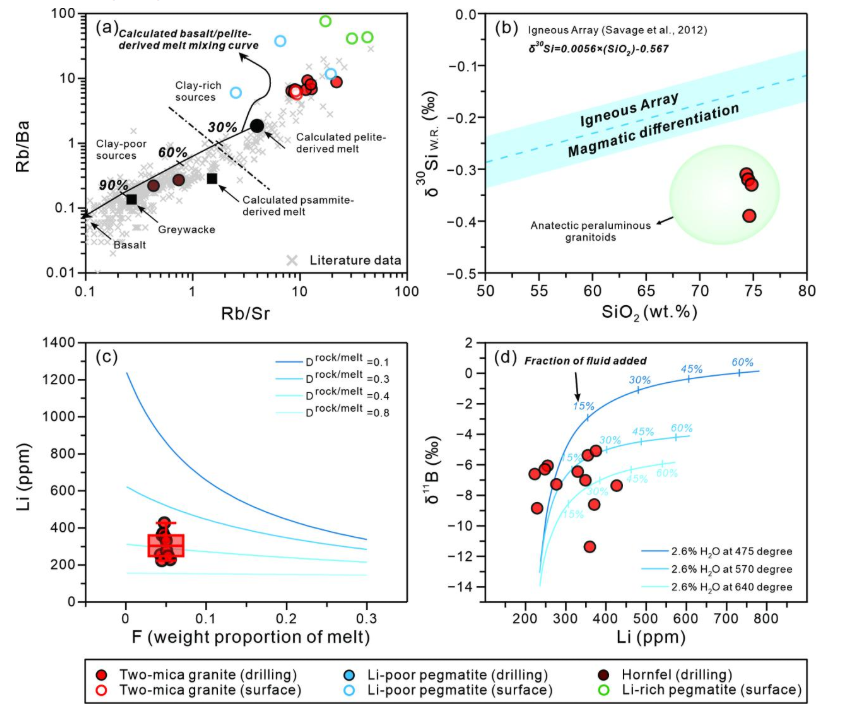
Figure 2. Enrichment of lithium in the melt during partial melting.
Stage 2: Progressive Enrichment of Lithium during Magmatic Differentiation
Based on the mineral assemblage of granites in the Jiajika lithium deposit, this study employed mass balance modeling to simulate variations in whole-rock geochemical data, confirming the progressive enrichment of rare metals like lithium in the residual melt during fractional crystallization. However, geochemical simulations show that when the crystallinity reaches the rheological melt extraction threshold (~75%), the lithium content in the residual melt (1500-2150 ppm) remains far below the saturation concentration required for spodumene crystallization (>5000 ppm). Therefore, fractional crystallization alone cannot form the Jiajika lithium-rich pegmatites.
Stage 3: The Role of the Exsolution of a Magmatic Volatile Phase in Lithium Enrichment during Late Magmatic Evolution.
During the late stage of the Cimmerian Orogeny (approximately 210–206 Ma), crustal extension and decompression occurred. A large volume of granite intruded into the Middle-Late Triassic turbidites, forming a granite dome accompanied by Buchan-type metamorphism. Under the stress of the dome structure, ductile and brittle fracture systems developed in the surrounding rocks. With the continuous crystallization of major rock-forming minerals, the water content of the melt gradually increased to near-saturation levels (8–10 wt.%). The pressure differential formed by the superposition of the extensional stress field of the dome structure and the pore pressure from extensive fluid exsolution drove the phase separation of water-rich melt and water-poor melt (Figure 3). The low-density, low-viscosity water-rich silicic melt escaped upwards, intruding into the distal brittle fracture system. Abrupt changes in thermodynamic P-T conditions and melt chemistry triggered large-scale mineralization of spodumene and other minerals, explosively forming lithium-rich pegmatite dykes. The remaining high-viscosity water-poor silicic melt intruded along proximal bedding planes and solidified into lithium-poor pegmatites (Figure 4).
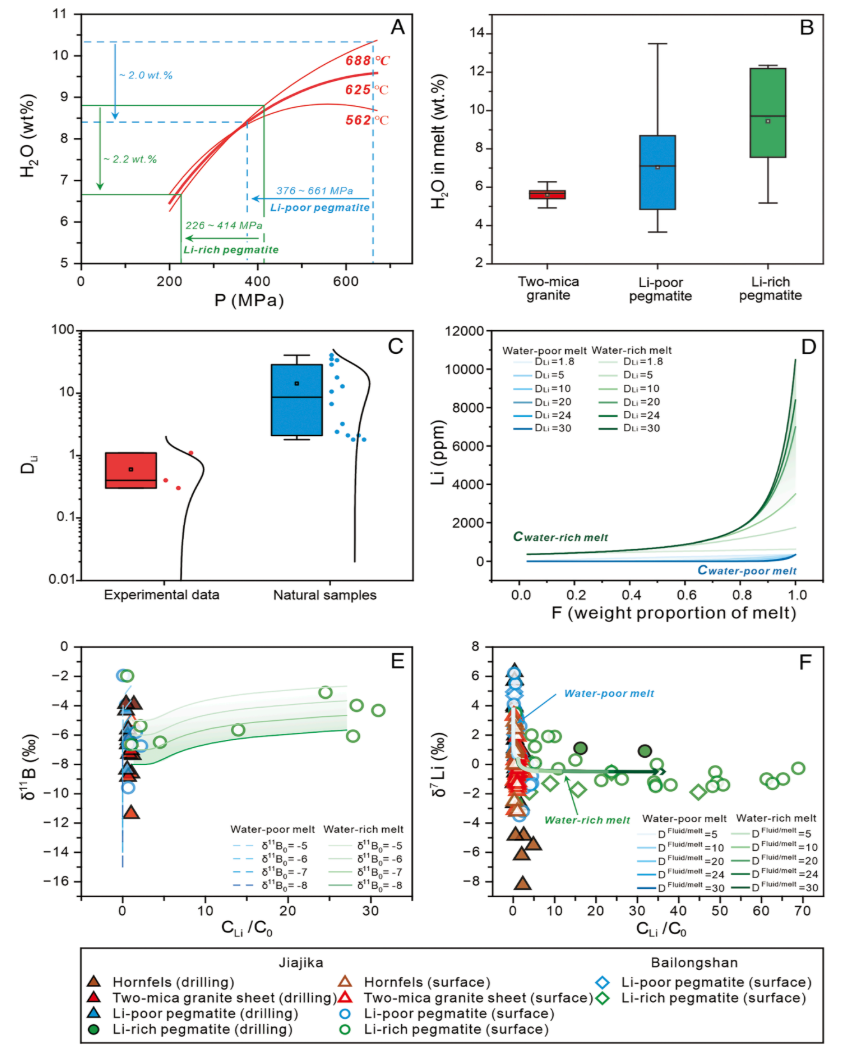
Figure 3. Geochemical evidence for phase separation between water-rich and water-poor melts in the late stage of magmatic evolution.
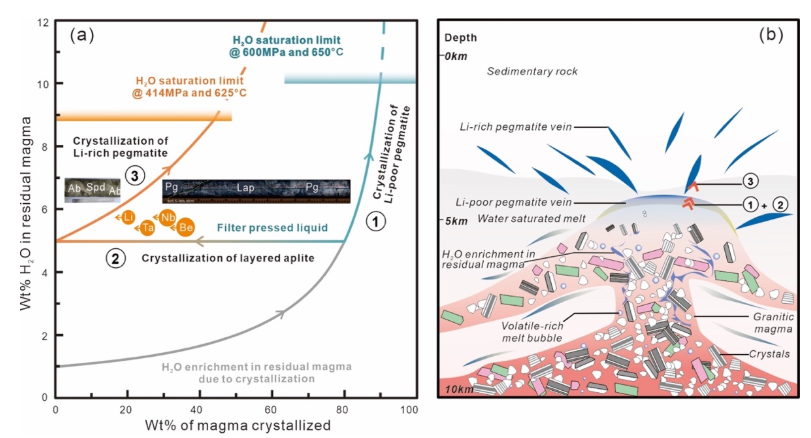
Figure 4. Formation mechanisms of lithium-poor and lithium-rich pegmatites in the Jiajika pegmatite-type lithium deposit.
Based on the petrological, mineralogical, and geochemical study of the scientific drilling cores from the Jiajika lithium deposit, this research proposes that lithium was enriched 3–8 times during the small-degree (5%) partial melting of pelitic rocks triggered by metamorphic dehydration, enriched 10–20 times in the residual magma during continuous magmatic fractional crystallization, and underwent a super-enrichment of 450 times due to decompression-induced separation of water-rich melt in the dome structure, explosively forming lithium-rich pegmatite dykes. This study demonstrates that both partial melting and fractional crystallization jointly governed the formation of lithium-rich pegmatites in the Jiajika pegmatitic lithium deposit, and elucidates the spatial distribution patterns of lithium-rich and lithium-poor pegmatites. According to the granite emplacement, burial depth, and erosion degree, the pegmatites were emplaced within a 2-km zone at the top of the granite sheet, and that the boundary between the Li-rich and Li-poor pegmatites coincides with the 5 km crustal depth that marks the transition between brittle and ductile deformation (Figure 5).
Based on the systematic study of the Jiajika deep drill cores, this research for the first time finely traces the enrichment patterns of rare metals such as lithium throughout the entire process from the partial melting sourcen to the emplacement and crystallization of granitic pegmatites, revealing the mineralization mechanism of rare critical metals controlled by crustal compression-extension tectonics during orogeny. The research findings provide theoretical guidance on economic exploitation and prospecting targets of concealed rare metal of ore bodies in the Songpan-Ganzi Orogenic Belt and other orogenic belts, ensuring the security and sustainable supply of the critical mineral resources in China.
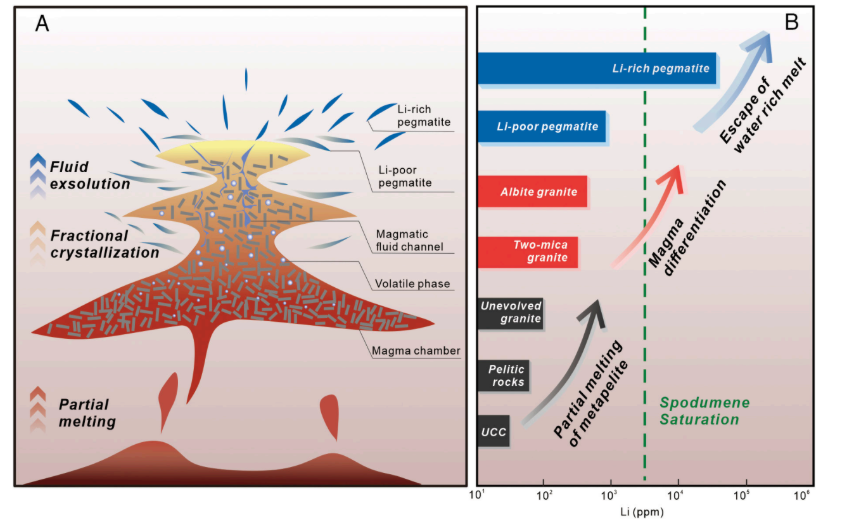
Figure 5. Three-stage metallogenic model of the Jiajika pegmatite-type lithium deposit.
This study was published online on February 3, 2026, in the Proceedings of the National Academy of Sciences of the United States of America (PNAS). Professor Hai-Zhen Wei from the School of Earth Sciences and Engineering, Nanjing University, is the first author. Academician Zhi-Qin Xu and Professor Wen-Bin Zhu from the School of Earth Sciences and Engineering, Nanjing University, are the co-corresponding authors. Co-authors include Professor Xi-Sheng Xu and Professor Qin Wang (School of Earth Sciences and Engineering, Nanjing University), Professor Jing Ma (School of Chemistry, Nanjing University), Professor Martin R. Palmer (University of Southampton, UK), Professor Anthony Williams-Jones (McGill University, Canada), Research Assistant Bi-Hai Zheng and Dr. Jian-Guo Gao (School of Earth Sciences and Engineering, Nanjing University), and graduate students He-Feng Lin, Ke Yang, and Da-Sheng Zuo.
This research was supported by the National Natural Science Foundations of China (92162211, 41973005), Nanjing University Excellence Initiative Project “Scientific drilling for the pegmatitic lithium deposit in western Sichuan”, and the Research Funds for the Frontiers Science Center for Critical Earth Material Cycling, Nanjing University (Grant No. 2022300193).
Full article is available at: https://doi.org/10.1073/pnas.2517372123